There are more than 100 known types of cancer.
The Diversity of Cancer
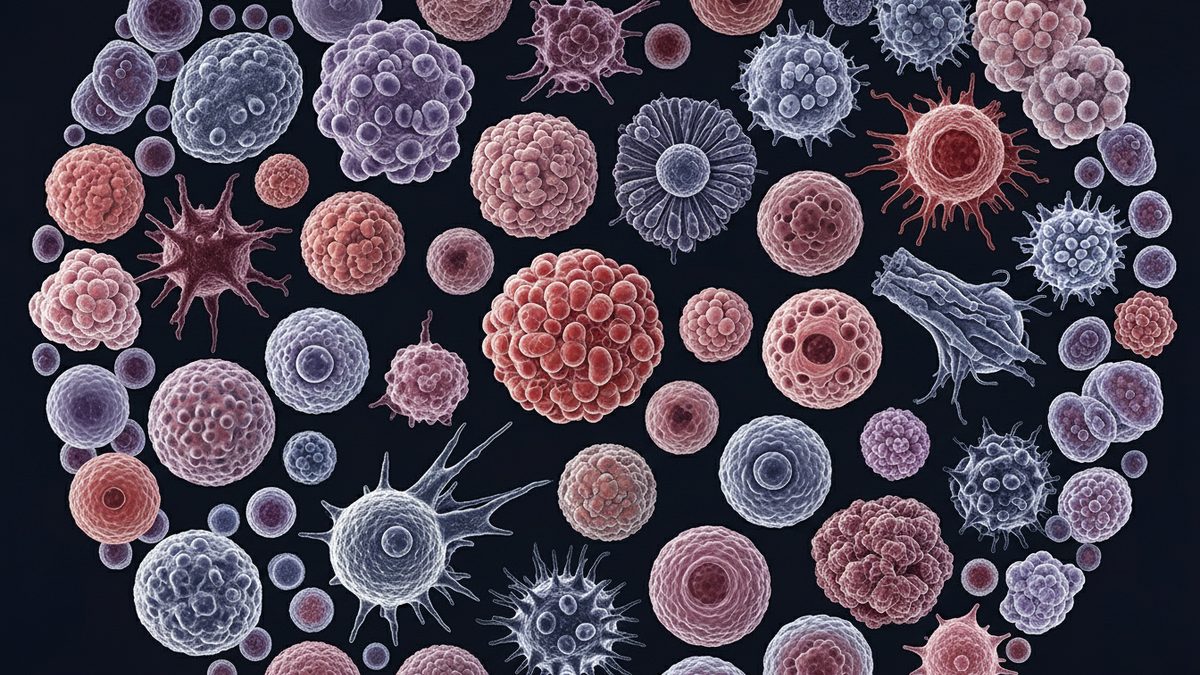
The term 'cancer' is not a single disease. It is an umbrella term for over 100 distinct conditions, each with unique biology, behavior, treatment response, and prognosis. A cell becomes cancerous when its DNA accumulates enough mutations to override the body's normal growth controls. The tissue-of-origin determines the cancer's classification.
Major Categories
Carcinomas (starting in epithelial cells: breast, lung, colon, prostate, skin) account for ~85% of all cancers. Sarcomas (bone, muscle, cartilage, fat) are rarer and more aggressive. Leukemias and Lymphomas affect blood and lymphatic systems. CNS tumors involve the brain and spinal cord. Melanomas arise from pigment-producing cells.
Why Classification Matters for Treatment
Two patients with 'lung cancer' may have completely different molecular subtypes, such as adenocarcinoma vs. squamous cell carcinoma vs. small cell, requiring entirely different targeted therapies. Next-generation sequencing of tumor DNA now identifies hundreds of specific mutations that guide treatment selection with unprecedented precision.
Emerging Rare Cancers
Medical advances constantly identify and reclassify cancers. Conditions once grouped together are now understood as distinct entities with different behaviors. Rare cancers (affecting fewer than 6 per 100,000 people) represent roughly 25% of all cases but receive disproportionately less research funding, making global cancer network registries essential for rare disease patients.
Medical Disclaimer: The information on this website is for educational purposes only and is not a substitute for professional medical advice, diagnosis, or treatment. Always seek the advice of your doctor or other qualified health provider.