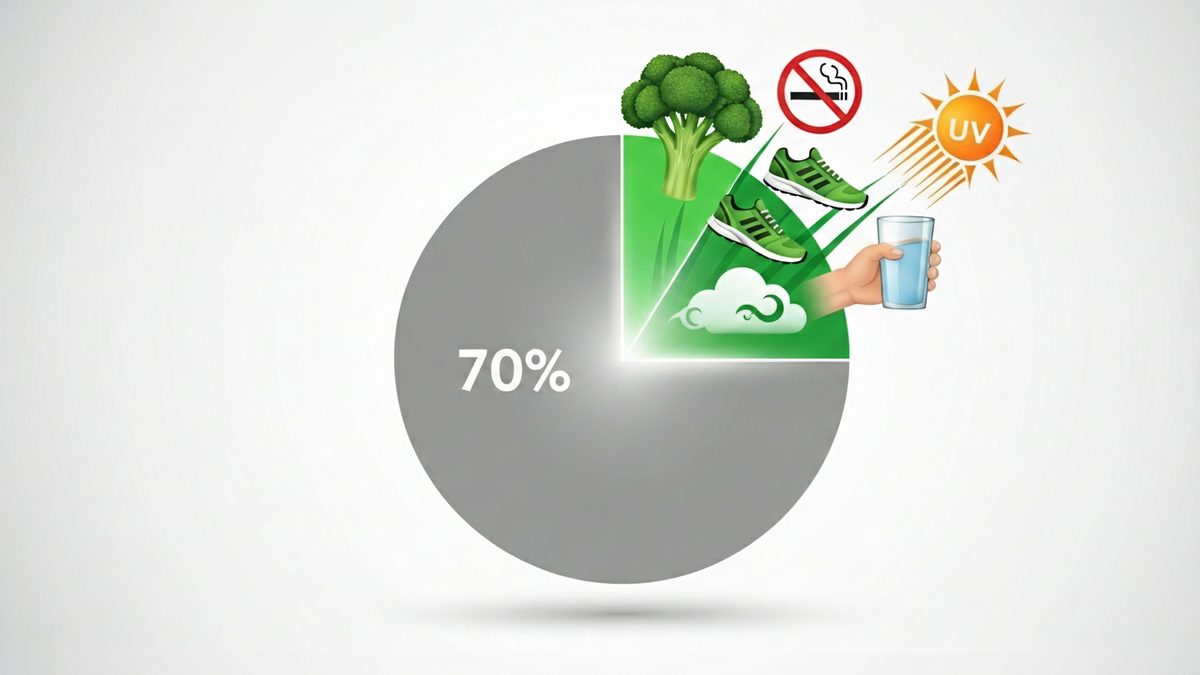
Over 30% of cancers are preventable with lifestyle changes.
What Does 'Preventable' Actually Mean?
The World Cancer Research Fund and IARC estimate that 30-50% of all cancers globally are preventable through reasonable lifestyle modifications. This does not mean perfection; it means that specific, high-impact risk factors are broadly avoidable and their elimination would statistically prevent roughly 1 in 3 cancer cases.
The Big Four Risk Factors
Tobacco accounts for approximately 22% of all global cancer deaths, the single largest preventable cause. Obesity and physical inactivity together contribute to 14-20% of cancers. Alcohol consumption is a Group 1 carcinogen linked to at least 7 cancer types. Unprotected sun exposure causes over 90% of non-melanoma skin cancers, the most common cancer worldwide.
Infection-Related Cancers
Approximately 13% of global cancers are caused by preventable infections: HPV (cervical, throat, anal cancers), Helicobacter pylori (stomach cancer), Hepatitis B and C (liver cancer). Vaccines for HPV and Hepatitis B exist and have already shown massive reductions in HPV-related cancer rates in countries with high vaccination coverage.
Environmental and Occupational Exposures
Radon gas in homes (the second leading cause of lung cancer), asbestos fibers, benzene, formaldehyde, and ionizing radiation are workplace and environmental carcinogens that disproportionately affect certain populations. Testing homes for radon and following occupational safety standards are often overlooked but highly effective preventive actions.
Medical Disclaimer: The information on this website is for educational purposes only and is not a substitute for professional medical advice, diagnosis, or treatment. Always seek the advice of your doctor or other qualified health provider.