The Complexity of Genetic Predisposition
Cancer is fundamentally a disease of the genome, but the role of heredity is often misunderstood. While every cancer involves genetic mutations, only about 5-10% of cases are truly 'hereditary'—stemming from a germline mutation passed from parent to child. The remaining 90-95% are 'sporadic,' caused by somatic mutations acquired throughout life due to environmental factors, lifestyle, and the inevitable errors that occur during natural DNA replication as we age.
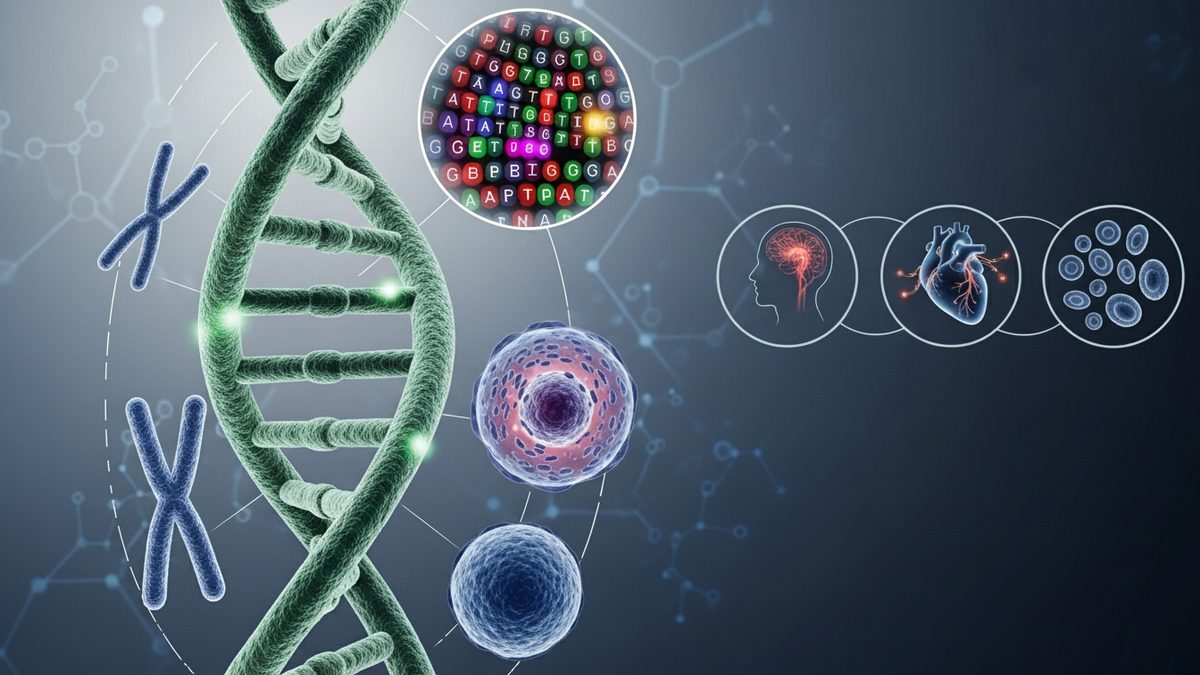
High-Penetrance Genetic Syndromes
In cases of hereditary cancer, a person is born with one 'faulty' copy of a critical tumor suppressor gene. The most famous example is the BRCA1/2 mutation, which significantly increases the risk of breast and ovarian cancer. Other high-penetrance syndromes include Lynch Syndrome (hereditary non-polyposis colorectal cancer) and Li-Fraumeni Syndrome (p53 mutation). Identifying these syndromes early allows for intensified surveillance and proactive surgical options that can reduce cancer risk by up to 90%.
The 'Two-Hit' Hypothesis
Scientifically, according to Knudson's 'Two-Hit' hypothesis, a cell only becomes cancerous after both copies of a tumor suppressor gene are inactivated. For most people, both 'hits' must happen randomly over time. For those with a genetic predisposition, they start life with the first 'hit' already present in every cell. This is why hereditary cancers often manifest at a much earlier age—the threshold for malignancy is reached significantly faster.
Polygenic Risk and Susceptibility
Beyond major single-gene mutations, researchers are now uncovering 'polygenic risk'—the collective effect of hundreds of tiny genetic variations that individually have a small impact but together can significantly sway a person's cancer susceptibility. This explains why some people smoke their whole lives and never get lung cancer, while others develop it despite never being exposed to high-risk environments. Your DNA acts as the 'loaded gun,' but environmental factors are the 'trigger.'
Precision Medicine and Genetic Profile
Genetic knowledge has revolutionized treatment through precision medicine. By sequencing the DNA of the tumor itself (somatic testing), oncologists can identify specific mutations that act as the 'engine' of the cancer. They can then select 'targeted therapies' that act as specific wrenches to break that engine, sparing healthy cells and leading to much higher success rates than traditional chemotherapy. Knowing your genetic profile is now as important as knowing the stage of the disease.
Navigating Genetic Counseling
Genetic testing is a profound decision that should be accompanied by professional counseling. A genetic counselor helps interpret results over simple 'positive/negative' labels, considering family history and the psychological impact of the findings. For those found to be at high risk, the medical path transitions from a reactive approach to a proactive, highly controlled management strategy that empowers patients to take charge of their long-term health.
⚕ Medical Disclaimer: The information on this website is for educational purposes only and is not a substitute for professional medical advice, diagnosis, or treatment. Always seek the advice of your doctor or other qualified health provider.